
The Heart Room Experience - Witness Report
As a researcher in wellbeing, I have always been fascinated by creativity, not as a talent reserved for a few, but as a fundamental human capacity.
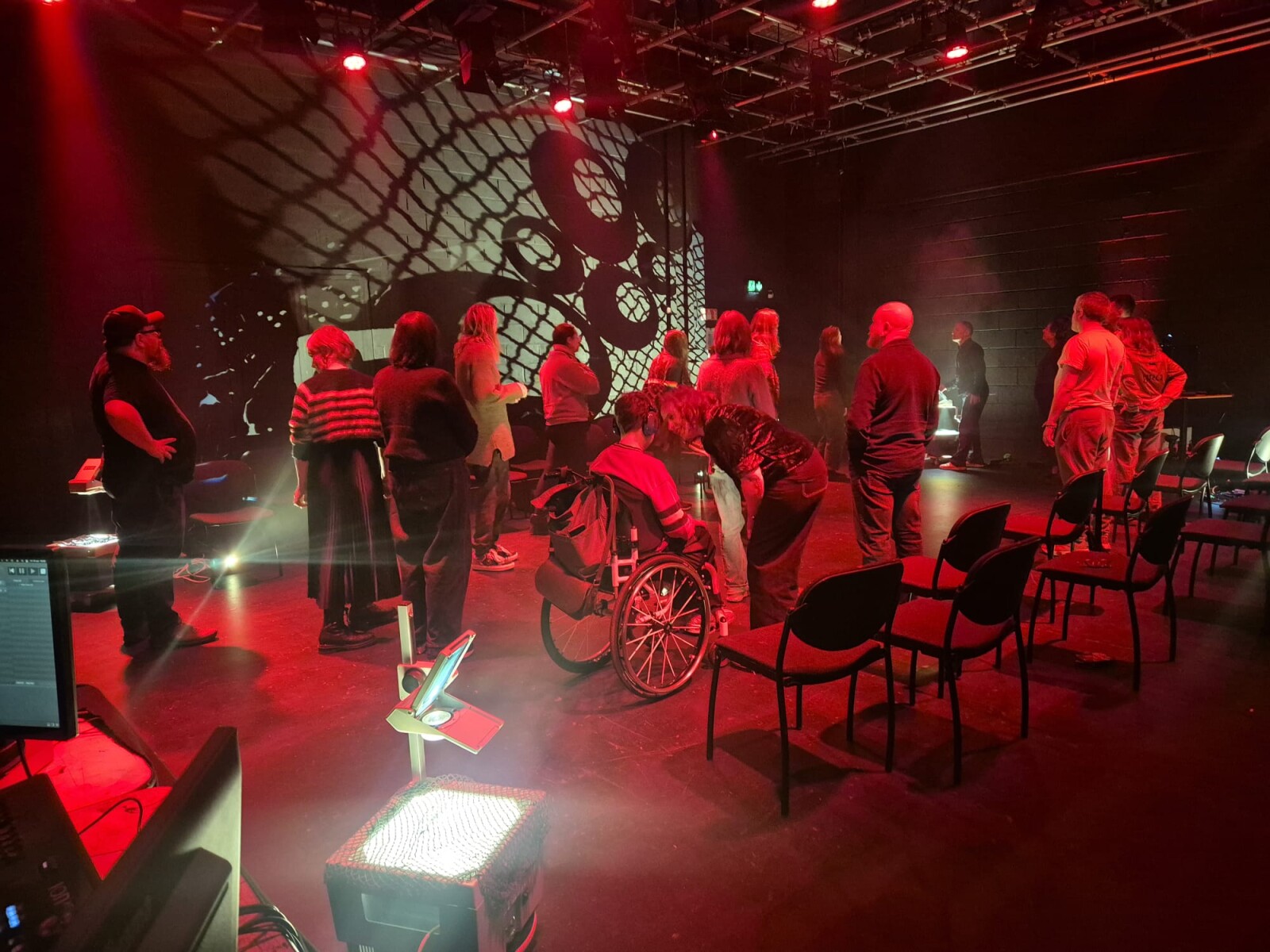
The Heart Room Experience*: creativity, play, and the courage to try
Jennifer Donnelly, PhD Researcher, Centre for Positive Health Sciences, Royal College of Surgeons in Ireland
As a researcher in wellbeing, I have always been fascinated by creativity, not as a talent reserved for a few, but as a fundamental human capacity.
Creativity is something many of us engage in naturally as children. It helps form our sense of self, allows us to express complicated emotions, and builds confidence through play and exploration. Developmental and psychological research consistently shows that creative play supports emotional regulation, social connection, and identity formation in early life (1). Yet, as we grow older, creativity often becomes something we distance ourselves from. Self-evaluation increases, and our attention shifts outward, towards how we are perceived, rather than inward, towards how expression actually feels. All too often, we hear adults say: I’m not an artist. I’m not a musician. I’m not a dancer. I’m not creative.
James Hosty and Outlandish Theatre challenge this narrative in their experimental production, The Heart Room. In this piece, Hosty does not rely solely on lighting, sound, or set design to create meaning, instead, the audience themselves become the medium.
In a bustling city-centre contemporary arts building, it is easy to passively move among strangers. Yet instead of being ushered directly to our seats, myself and 23 other audience members, most of whom had never met, were first gathered together in the lobby. Being welcomed together in this shared public space, there was an immediate sense that we were not simply waiting to watch a performance, but beginning one. The boundary between audience and artwork, between strangers and co-creators, felt deliberately softened before we ever entered the theatre room.
This early encounter subtly shifted our role. We were no longer passive observers, but participants, gradually united through art, expression, creativity, and, most importantly, play. Using simple movements, sounds, and human expressions, Hosty facilitates a shared improvisational space that unfolds organically as the audience moves together from lobby to performance space.
From a wellbeing perspective, this matters. Play and creative expression are increasingly recognised as essential for adult wellbeing, supporting emotional flexibility, stress regulation, and social bonding. Research suggests that safe, playful environments help shift the nervous system away from threat-based states and toward connection and curiosity (2). Yet many adults have learned to suppress spontaneous expression in favour of control, competence, and composure. The Heart Room gently disrupts this conditioning from the very moment participants arrive.
As a participant, I became acutely aware of my own internal responses to this transition. Initially, there was discomfort, a familiar fear of not knowing what would happen next; of laughing out loud on cue; of moving without music; of being seen without a script. Research on self-conscious emotions shows that adults are particularly sensitive to perceived social evaluation, often inhibiting creative risk-taking as a result (3). Yet theatre and creativity have a unique capacity to draw us out of this self-focused mindset. It was genuinely delightful to watch adults of all ages, genders, personalities, and life stages move through that initial awkwardness together, rediscovering the relief of simply participating in creativity. There were no expectations placed on how one should take part. Some participants stepped forward quickly, embracing the invitation to perform. Others took time, opening up more cautiously. Both responses were celebrated, and added to the overall experience
As humans, we are often oriented toward outcomes, toward goals, products, and polished results. If creative expression does not lead to something tangible, we may question its value. This productivity-driven mindset contrasts sharply with research on mindfulness and presence, which highlights the psychological benefits of non-striving and process-oriented engagement (4).
The Heart Room resists outcome-focused creativity entirely. There is no performance to perfect, no role to play “correctly,” and no final product to evaluate. Instead, it offers something quieter and more radical: permission to be present. The focus is not on doing, but on being, together.
In a world that increasingly rewards productivity over presence, The Heart Room reminds us that creativity does not need to be impressive to be meaningful. Sometimes, it simply needs to be felt.
* The Heart Room Experience concept by Outlandish Theatre: a performance space to celebrate the autonomy of the artist and co-creator, with audience members as participants.
References
1. Winnicott, D. W. (1971). Playing and reality. Tavistock.
2. Porges, S. W. (2011). The polyvagal theory: Neurophysiological foundations of emotions, attachment, communication, and self-regulation. W. W. Norton & Company.
3. Brown, B. (2012). Daring greatly: How the courage to be vulnerable transforms the way we live, love, parent, and lead. Gotham Books.
4. Kabat-Zinn, J. (1994). Wherever you go, there you are: Mindfulness meditation in everyday life. Hyperion.
.